
Schools & campuses
Systems that work in every room, run by people who aren't technicians.
A school is dozens of rooms that all have to work the same way, operated by staff whose job is teaching, and maintained by a small team who cannot be in two buildings at once. What matters is not how impressive any one room is — it is that the hundredth room behaves like the first and can be fixed without a specialist.
What usually brings someone to us.
- “Announcements are audible in some rooms and unintelligible in others.”
- Intelligibility is a coverage and tuning problem, not a volume one. Corridors, hard-floored rooms and gymnasiums each need their own approach, and a single system pushed harder makes the bad rooms worse. Zones get laid out and tuned per space.
- “Every classroom is slightly different, so a substitute teacher loses ten minutes.”
- Standardisation is the whole job. The same display, the same input, the same place to plug in, the same control. It is less interesting than a showpiece room and it is what actually gets used.
- “The WiFi collapses when a class all connect at once.”
- Coverage and capacity are different problems. A survey that proves signal everywhere says nothing about thirty simultaneous devices in one room. Access point placement, channel planning and per-room density are designed for the way a school actually loads the network.
- “We have cameras but pulling footage for an incident takes a day.”
- That is a retention and access problem rather than a camera problem. Storage sized to the retention you actually need, sensible naming, and a way for the right people to find a time and a door quickly without calling anyone.
- “Work has to happen without disrupting classes.”
- Which means phased scopes, work in breaks and after hours, and a plan that assumes the building is occupied. That is scheduling, and it belongs in the proposal rather than being discovered halfway through.
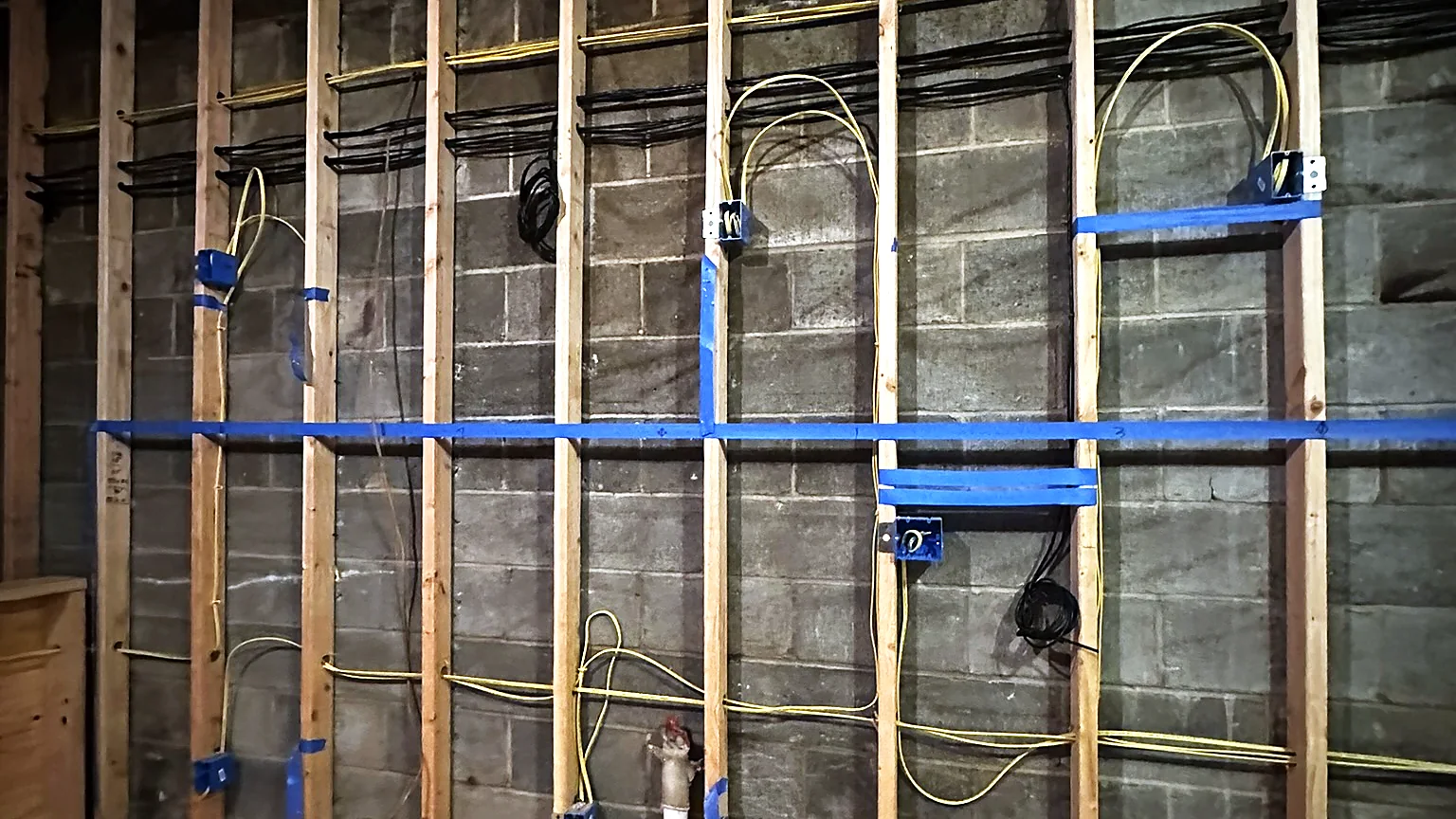
Schools are judged on the worst room, not the best one. Consistency, labelling and documentation are worth more here than anything that photographs well, because the people who maintain it are not the people who installed it.
What goes in
Scoped for the room, not off a price list.
Certified on the platforms this uses



- Classroom displays and sources, specified identically across a building so any teacher can walk into any room
- Paging and intercom that reaches classrooms, corridors and outdoor space with intelligible speech, not just volume
- Cameras across entries, corridors and grounds, with retention set to a policy rather than to whatever the recorder came with
- Access control on exterior and interior doors, with credentials that can be revoked the day somebody leaves
- Structured cabling and fiber between buildings, labelled and tested so the next contractor is not guessing
- Wireless designed for density — a class of thirty devices in one room is a different problem from thirty devices in a building
- Auditorium and gymnasium sound, where the room is large, reverberant and used for speech more than music
- Digital signage for wayfinding and announcements, updatable by office staff
Tell us what you're trying to solve.
Free on-site estimates across Suffolk and Nassau County. We look at the space and tell you what it needs — and what it doesn't.
System down and need service now? Call (949) 969-3345 — Monday – Friday, 10am – 6pm.