
Retail & multi-site
Coverage where it matters, on a network the registers aren't fighting.
Retail has two technology problems that get solved separately and should not be. The first is knowing what happened — at the register, at the door, in the stockroom. The second is that the point-of-sale, the cameras, the music and the guest WiFi are usually all on one flat network, and the busiest hour is when that shows.
What usually brings someone to us.
- “We have cameras but the footage is useless when we actually need it.”
- Usually placement and expectations. A wide shot of a room identifies that something happened; identification at a register or a door needs a camera positioned and specified for that job. Coverage gets designed against the questions you need answered, and retention against how long it takes you to ask.
- “Card terminals slow down when the store is busy.”
- Which is what a flat network looks like under load. Cameras, guest WiFi and back office traffic all share the same path as the payment traffic, and the busiest hour is when it shows. Segmentation puts each on its own lane with the point-of-sale prioritised.
- “Every site was done by whoever was local, so nothing matches.”
- That gets expensive at support time rather than install time. A standard build — same equipment, same layout, same labelling and naming — means a fault at one site is diagnosed with what was learned at another.
- “Keys to the stockroom are somewhere in a drawer.”
- Credentials rather than keys, revoked the day somebody leaves, with a record of who opened what. It is the single cheapest upgrade in most retail spaces and the one most often left until after something goes missing.
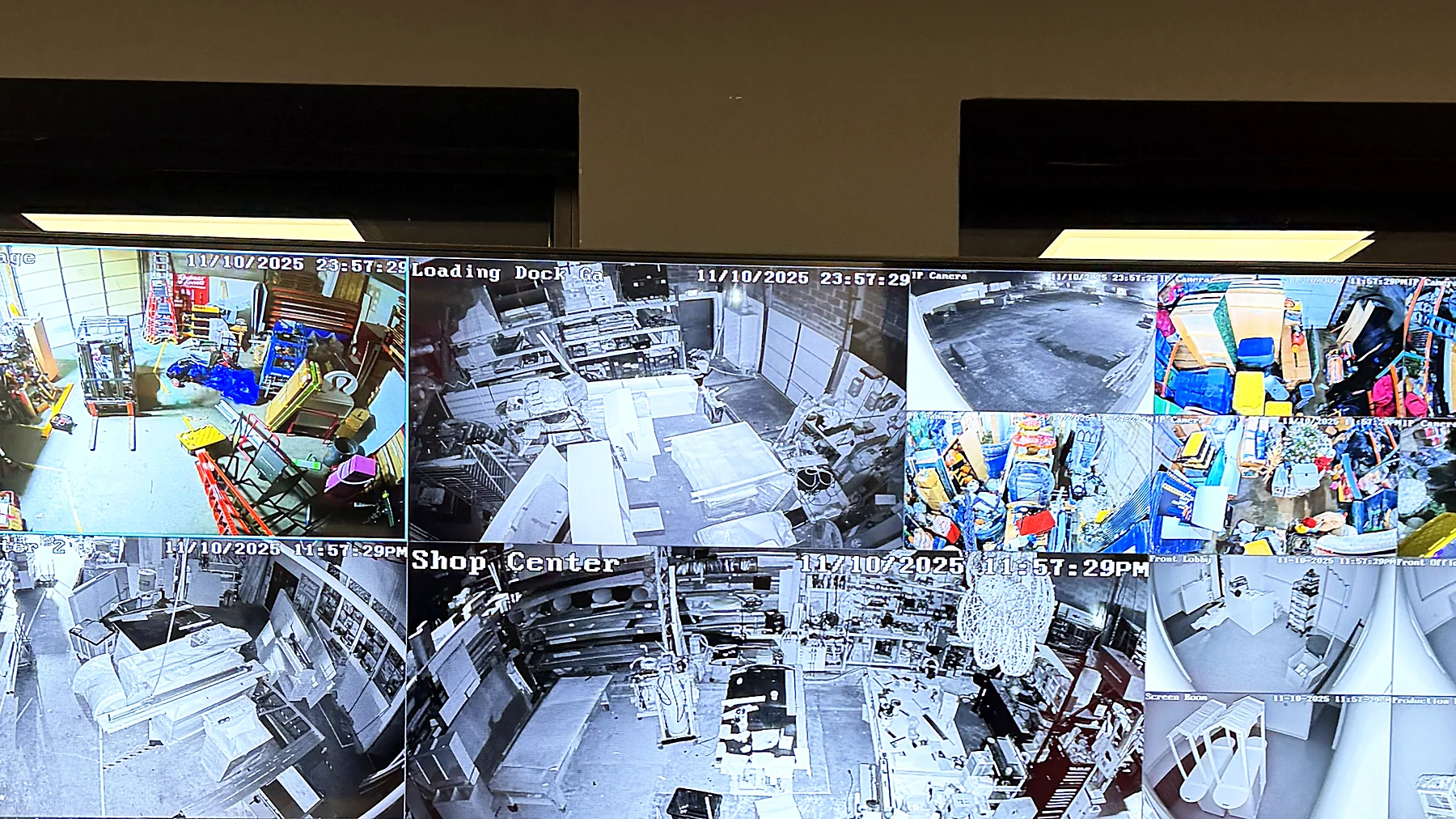
Most retail technology is bought one problem at a time and ends up as four systems that do not know about each other. Scoping the cameras, the doors and the network together costs less than any two of them bought separately, and it is the only way the busy hour behaves.
What goes in
Scoped for the room, not off a price list.
Certified on the platforms this uses


- Camera coverage designed around the questions you actually ask — register identification, entry faces, stockroom accountability
- Retention sized to how far back you realistically need to look, rather than to the recorder's default
- Access control on stockrooms, offices and back doors, with credentials revoked instantly rather than a drawer of unreturned keys
- Segmented networking so point-of-sale, cameras, back office and guest WiFi are not sharing one circuit
- Background music with scheduling, at a level set for the room rather than by whoever touched it last
- Digital signage and menu boards your own staff can update, specified for the light the room actually has
- Consistent build across sites, so the fifth store is the same as the first to install and to support
- Structured cabling done to standard, tested and labelled, in fit-outs where the schedule is unforgiving
Tell us what you're trying to solve.
Free on-site estimates across Suffolk and Nassau County. We look at the space and tell you what it needs — and what it doesn't.
System down and need service now? Call (949) 969-3345 — Monday – Friday, 10am – 6pm.