
Offices & professional space
Meeting rooms that join on time, with whoever walks in.
The meeting starts at ten and at 10:06 somebody is still hunting for a dongle. Conference rooms fail in the first two minutes or not at all, and almost every failure is a design decision made months earlier — the wrong microphone for the ceiling height, a room system nobody standardised, a table with no way to plug into it.
What usually brings someone to us.
- “Every room is different, so nobody knows how to start a meeting in a room they don't normally use.”
- Standardise the room, not just the hardware. The same join experience, the same control layout and the same naming in every room means the small room and the boardroom are the same to walk into. It also makes them supportable — one configuration to fix rather than six.
- “Guests can't share. They have their own laptop and their own meeting, and it doesn't work with our system.”
- That is what a bring-your-own-device path is for. One cable at the table, or a wireless connection, that hands the room's camera, microphones and display to a visitor's laptop. Without it every external meeting falls back to a laptop's own microphone in the middle of a table, and the far end can hear the difference.
- “People on the far end say we sound distant, or that they only hear whoever is nearest the microphone.”
- Usually microphone placement against ceiling height. A single unit in a long room picks up the far seats at a fraction of the near ones, and gain riding cannot invent what was never captured. Ceiling arrays with steerable pickup are laid out for the table's real dimensions, and the echo cancellation and gain structure get set in the room rather than left at whatever shipped.
- “The room works, then stops working after an update.”
- Room systems need to be enrolled and managed, not just installed. Certified hardware, a device management path, and a configuration recorded somewhere other than one person's memory — so an update is a routine event rather than the reason a board meeting starts late.
- “We're fitting out and the AV people want to come after the furniture is in.”
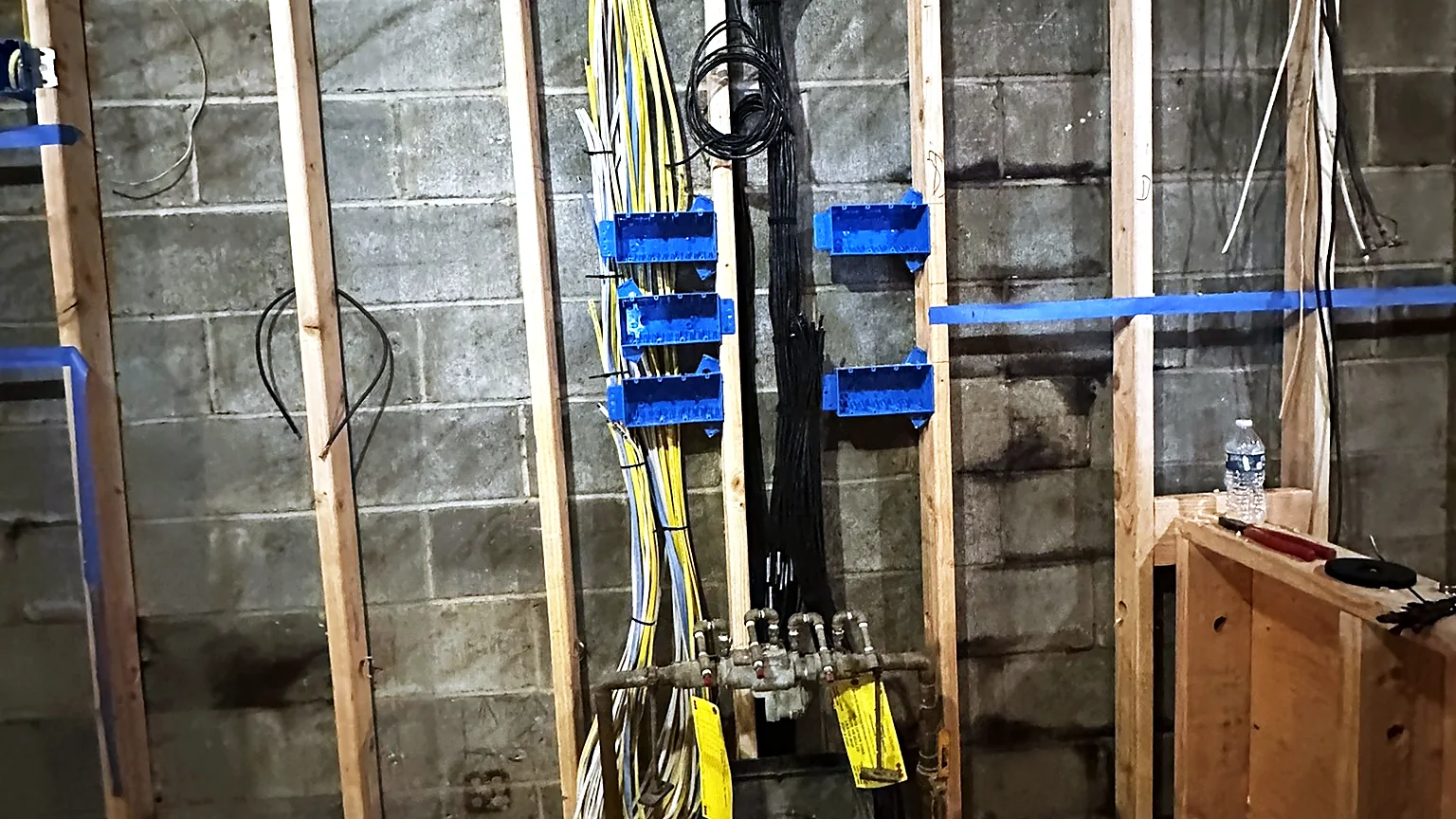
- Then the cabling goes where the furniture already is. Table connectivity, floor boxes, display positions and ceiling microphone layout are cheap decisions before the walls close and expensive ones afterwards. We would rather be in the room at rough-in.
A conference room is judged in its first two minutes, every time it is used, by whoever is in it. That is a high bar and a narrow one — it means getting the microphones, the join and the guest path right matters more than anything else you could spend the budget on.
What goes in
Scoped for the room, not off a price list.
Certified on the platforms this uses


- Microsoft Teams Rooms and Zoom Rooms — certified hardware, configured and enrolled rather than dropped in a box on the table
- Bring-your-own-device connections, so a visitor with their own laptop joins their own meeting on the room's camera, microphones and display
- Ceiling array microphones with steerable pickup, for rooms where a table microphone would be in the way or the table moves
- Echo cancellation and gain structure set for the actual room, not left at defaults
- Cameras with framing that follows who is speaking, so remote attendees see a person rather than a table
- One-touch join, and a control layer with the smallest number of buttons that can start a meeting
- Scheduling panels outside the door, tied to the calendar system the office already books with
- Displays sized and mounted for the far seat, not for the wall
- Structured cabling, floor boxes and table connectivity designed before the furniture is set
- Segmented networking so conferencing traffic is not competing with everything else in the building
Tell us what you're trying to solve.
Free on-site estimates across Suffolk and Nassau County. We look at the space and tell you what it needs — and what it doesn't.
System down and need service now? Call (949) 969-3345 — Monday – Friday, 10am – 6pm.