
Churches, synagogues & assembly
Intelligible in the back row, and runnable by a volunteer.
Worship spaces are the hardest rooms we work in and the most constrained. They are large, reverberant and often historic, so what can be mounted and where is limited. The service has to be intelligible everywhere, it usually has to reach people at home as well, and the person running it on a given week is a volunteer who was shown once.
What usually brings someone to us.
- “You can hear it at the front and not make out a word at the back.”
- Turning it up makes that worse, not better — in a reverberant room more level means more reflection arriving late and smearing the speech. The answer is coverage and directivity: speakers aimed so sound lands on people rather than on stone, and where the room allows it, treatment on the surfaces doing the damage.
- “A different volunteer runs it every week and it shows.”
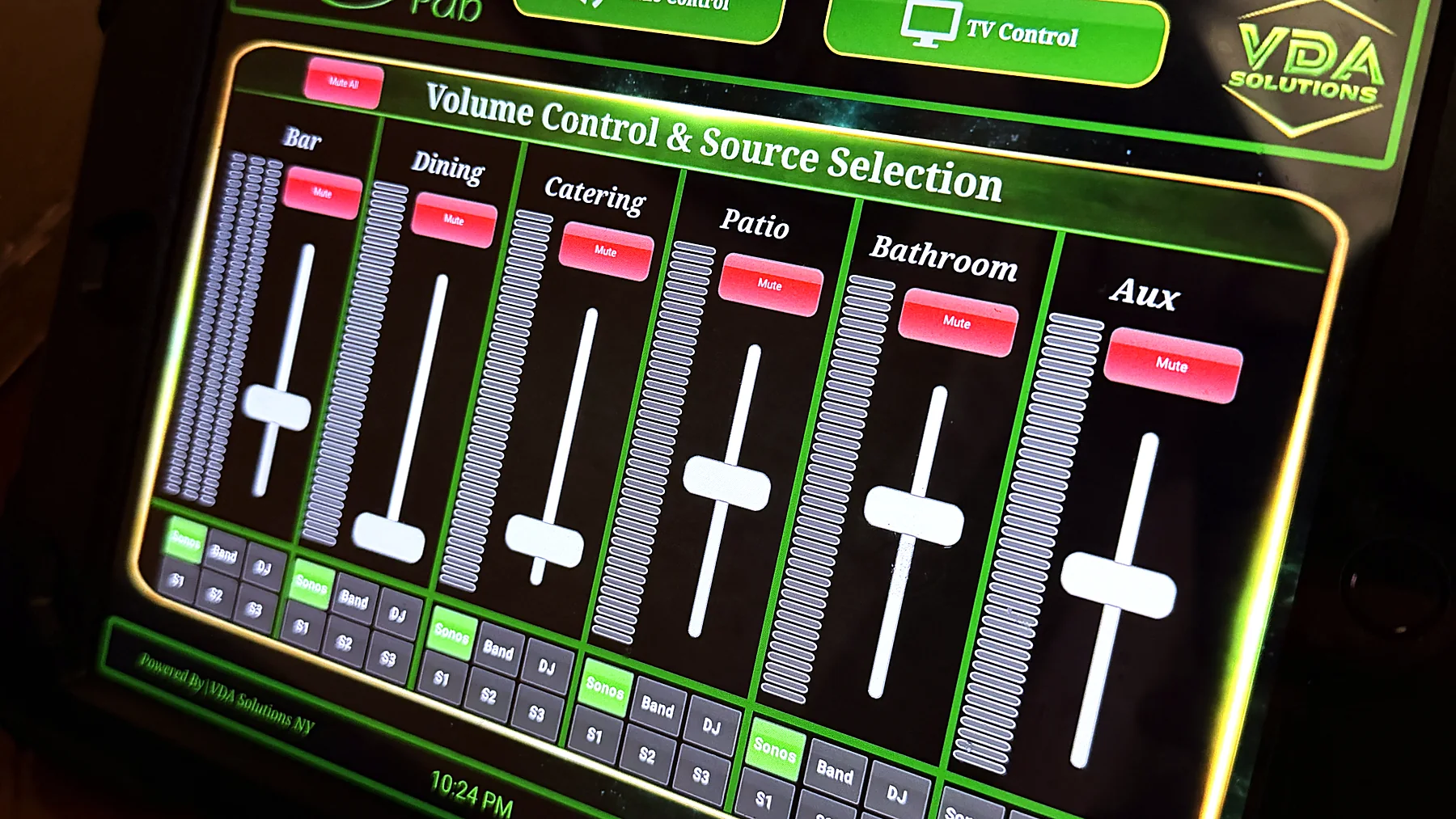
- Then the system is too complicated for its actual operators. Presets for the parts of a service, the smallest set of controls that can run them, clear labelling, and a way back to a known-good state. Depth stays available for whoever wants it.
- “The stream sounds nothing like being in the room.”
- Usually because it is a camera's own microphone picking up a room. A proper stream takes its audio from the system as a separate mix, so people at home hear the service rather than the building.
- “Microphones cut out or pick up interference.”
- Frequency coordination, and it gets harder every year as spectrum gets reallocated. Channels are planned for the building and its neighbours, and antenna placement matters as much as the receiver.
- “We can't run cable there — it's a historic building and nothing can be seen.”
- That is a normal constraint, not an obstacle. Pathways, mounting and finishes get worked out with whoever is responsible for the building before anything is specified, and where the honest answer is that something cannot be done sympathetically, we say so.
Worship spaces reward patience in the design and punish equipment bought first. The room decides most of what will work, so it is worth measuring and listening before anything is specified.
What goes in
Scoped for the room, not off a price list.
Certified on the platforms this uses
- Speech-first sound design — intelligibility in a reverberant room is a coverage and directivity problem before it is a power one
- Speaker systems chosen and aimed for the seating, with sightlines and the building's fabric respected
- Wireless and lectern microphones with coordinated frequencies, so nothing drops out mid-service
- Assistive listening, which for many rooms is a requirement rather than a nicety
- Streaming and recording with a signal path taken from the system rather than a camera's on-board microphone
- Cameras positioned for the service rather than for the room, and switched simply enough for one operator
- Projection or displays sized for the furthest seat and specified for the light actually in the room
- Stage and architectural lighting on presets that match the parts of a service
- A control layer with the smallest number of controls that can run a service, and a way back to a default
- Acoustic treatment where it can be done without altering what the room looks like
Tell us what you're trying to solve.
Free on-site estimates across Suffolk and Nassau County. We look at the space and tell you what it needs — and what it doesn't.
System down and need service now? Call (949) 969-3345 — Monday – Friday, 10am – 6pm.